
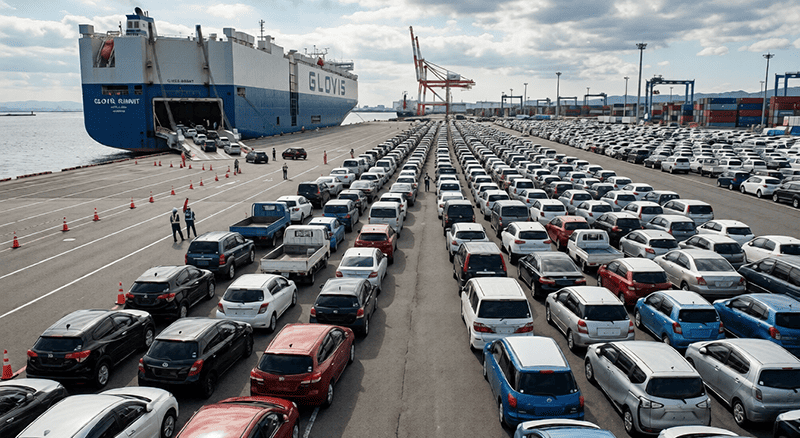
“I want to get rid of my old car, but it seems wasteful to scrap it.” “I heard that Japanese cars sell for high prices overseas, but is that true?” — For those with these concerns, we provide an easy-to-understand explanation of the process for exporting vehicles from Japan to overseas, including procedures, costs, and timelines.
Why Are Japanese Used Cars Popular Overseas?
The reasons Japanese used cars receive high evaluations overseas are clear:
- High maintenance standards from vehicle inspection systems — They pass strict inspections every 2 years and are in better condition than same-year vehicles from other countries
- Low mileage — Japan’s average annual mileage is approximately 8,000 km, less than half that of Europe and North America
- Abundant variety of models — From kei cars to commercial vehicles and sports cars, many models not found anywhere else in the world
- Trusted brand strength — Toyota, Nissan, Honda, Subaru, etc. Parts are available worldwide
Major Export Destinations and Popular Models
| Region | Main Destinations | Popular Models |
|---|---|---|
| Africa | Kenya, Tanzania, Uganda | Toyota Vitz, Probox, Hiace |
| Middle East | UAE, Saudi Arabia | Land Cruiser, Patrol, Hilux |
| Oceania | Australia, New Zealand | Skyline GT-R, Supra, RX-7 |
| North America | United States (25-year rule) | R34 GT-R, S15 Silvia, S2000 |
| Southeast Asia | Myanmar, Philippines | Corolla, Fit, Elf |
Export Process (5 Steps)
STEP 1: Consultation and Appraisal
Please first provide information about your vehicle (model, year, mileage, condition). Based on demand and market prices in overseas markets, we will provide a purchase price or consignment sales price.
STEP 2: Sales Contract
Once you are satisfied with the price, we will execute a sales contract. Required documents include vehicle registration certificate, certificate of seal impression, and certificate of transfer of rights.
STEP 3: Export Deregistration
We perform “export deregistration (tentative)” at the Land Transport Bureau. This cancels the license plate domestically and puts the vehicle in a state where it can be exported. We handle all these procedures on your behalf.
STEP 4: Customs Clearance and Shipment
We prepare documents required for export customs clearance (invoice, packing list, export deregistration certificate) and declare them to customs. After customs clearance, the vehicle is shipped to the destination by RORO ship or container ship.
STEP 5: Payment
After shipment is completed, we will transfer the funds to your designated account. For purchase agreements, payment is completed within 3 business days at the earliest.
Estimated Costs
If you are the “seller” of the vehicle, you generally bear no costs. We cover all export costs (transportation, customs clearance, insurance, etc.) and settle them against the purchase price.
For reference, here is a breakdown of typical export costs:
| Item | Estimated Cost |
|---|---|
| Domestic Transportation (Home to Port) | ¥20,000–50,000 |
| Export Deregistration and Documents | ¥10,000–20,000 |
| Customs Clearance Fee | ¥15,000–30,000 |
| Ocean Freight (Varies by Destination) | ¥70,000–200,000 |
| Marine Insurance | 1–2% of vehicle value |
What is the 25-Year Rule?
In the United States, vehicles that are 25 years old from their date of manufacture are exempt from safety and emissions regulations and can be legally imported. This has resulted in former Japan-exclusive models (R34 GT-R, S15 Silvia, etc.) being traded at very high prices in the United States.
In other words, a “old car” in Japan can become a “treasure” overseas.
Frequently Asked Questions
Q. Can old cars or high-mileage vehicles be sold overseas?
Yes. In Africa and Southeast Asia, there is strong demand for vehicles with over 100,000 km. Vehicles that have passed Japanese vehicle inspections are valued as “high quality” overseas.
Q. Can cars with accident history or repair records be accepted?
Minor repair histories are not a problem. Even if there are issues affecting drivability, the vehicle may have demand overseas as a parts car. Please feel free to consult with us.
Q. How long does the process take?
From vehicle pickup to shipment departure takes approximately 2–3 weeks. Payment is made within 3 business days at the earliest after shipment is completed.
Leave It to SOUKYO (SOUKYO)
Soukyo Corporation, based in Yashio, Saitama Prefecture, provides one-stop services for used car sales, rental, maintenance, and export. We want you to know that when disposing of your vehicle, there is an option for “overseas sales” in addition to “scrapping” — that is our wish.
Contact Us
Buying, selling, inspections, rentals — whatever your question, we're happy to help.