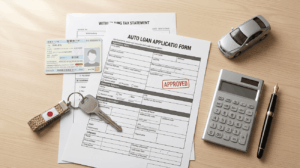

“I want a car. I can’t pay cash. But I’ve heard foreign residents can’t get auto loans in Japan.”
That belief is half right. Japan’s auto-loan industry is more cautious with foreign applicants, but with the right preparation, the right lender, and the right sequence, approval is achievable — even without permanent residency, even without a co-signer. That’s the on-the-ground reality.
This article distills what our shop in Yashio, Saitama — which serves a high proportion of foreign-resident customers — has learned about getting loans approved. We’ll cover realistic approval rates by visa type, how to choose the right lender, how to assemble your documents, and the most common mistakes.
Why Foreign-Resident Auto Loans Are “Harder”
Lenders care about one thing: “Will the money I lend come back?” Compared with Japanese applicants, foreign residents have three structural factors that raise red flags:
| Lender Concern | What They Examine |
|---|---|
| ① Visa duration | Will the visa expire and the borrower leave Japan during the loan term? |
| ② Credit history depth | Length and density of Japanese domestic credit history (CIC, JICC) |
| ③ Repayment stability | Tenure, job-change frequency, income relative to Japanese averages |
The lesson: rejection isn’t because you’re foreign. It’s because of these three concerns. Address them one by one and approval rates change dramatically.
Real Approval Rates by Visa Status
The figures below reflect our shop’s accumulated experience with major lenders. They’re directional only — final decisions hinge on your specific income, tenure, and application.
| Visa Status | Approximate Approval Rate | Key Considerations |
|---|---|---|
| Permanent / Special Permanent / Naturalized | 80-95% | Roughly equivalent to Japanese applicants; income and tenure dominate |
| Spouse of Japanese / Permanent Resident | 75-90% | Combined household income often clinches approval |
| Highly Skilled Professional (i, ii) | 70-90% | High-income profiles approve readily |
| Business Manager | 50-80% | Two completed fiscal years and 5M+ yen personal income are typical thresholds |
| Engineer / Specialist in Humanities / International Services | 50-75% | Three years tenure, 4M yen income, three years on visa is the inflection point |
| Specified Skilled Worker (i) | 15-35% | Co-signer essentially required; employer support letters help |
| Technical Intern | 5-15% | Solo applicants almost never approved; corporate routes are realistic |
| Student | 5-10% | Solo applicants not approved; family co-signer required |
| Dependent | 15-30% | Driven by personal income; spouse with permanent residency dramatically improves odds |
Key insight: visa name matters less than remaining visa duration, history of visa renewals, and length of Japanese employment. An applicant on the Engineer visa with 3 years remaining and 2 years tenure has roughly half the approval rate of one with 5 years remaining and 4 years tenure — on the same visa.
Lender Profiles — Order of Application Matters
The most expensive mistake foreign applicants make is applying to two or three lenders with the same profile and accumulating “application history” entries on their credit file. Multiple short-window applications themselves create an “application black-out” status, making subsequent applications harder.
Our perception of how each major lender treats foreign applicants:
| Lender | Foreign-Resident Friendliness | Notes |
|---|---|---|
| Orico | ★★★★ | Approval improves when routed through a trusted dealer; used-car dealer applications work well |
| Jaccs | ★★★ | Decisions track documentation closely |
| Premier Finance | ★★★★ | Proprietary criteria sometimes approve when others decline |
| APLUS | ★★★ | Strongest within its parent group |
| Cedyna (SMBC) | ★★ | Banking-affiliated; sensitive to visa duration |
| Toyota Finance | ★★ | Best via Toyota dealerships; rarely smooth from independent used-car shops |
| Bank-issued auto loans | ★ | Permanent residency essentially required; lowest rates but highest barrier |
In our experience, “Premier → Orico → Jaccs” is the highest-yielding sequence. The opposite — starting with a bank auto loan, getting declined, and arriving at our shop with damaged credit history — is unfortunately common.
Five Ways to Improve Your Approval Odds
Method 1: Time Your Application Around Your Permanent Residency Application
Applicants with a pending permanent-residency application can disclose that status when applying. Although the application isn’t final, evidence of submission counts positively at some lenders.
Conversely, if your residency approval is “any day now”, the most cost-effective approach is to wait. Six extra months of higher interest typically costs more than waiting six months for the better rate that comes with permanent residency.
Method 2: Build a “Three-Document Bundle”
Beyond the basic requirements, voluntarily including these three documents shifts perception:
- Withholding tax statements (last two years): demonstrates income consistency. One year alone invites suspicion that the income was a one-off.
- Letter of employment (with company seal): objectively documents tenure and role.
- Resident tax certificate: often more credible than the withholding statement as proof of income.
An applicant who submits only the bare minimum can read as “not confident in their own credit.” Volunteering extra documentation tends to leave reviewers with a noticeably better impression.
Method 3: Find the Right Co-Signer
A co-signer materially raises approval rates. The priority order:
- Japanese spouse or relative (strongest).
- Spouse or relative with permanent residency.
- Long-tenured permanent-resident friend (with written consent).
- Company executive (in the context of work-related vehicle use).
Caveat: co-signers undergo their own credit review, and a co-signer with credit issues will sink the entire application. Confirming the prospective co-signer’s standing diplomatically before asking is both courteous and strategic.
Method 4: Used Car + Short Loan Term
“New car, 5M yen, 7-year loan” vs. “Used car, 2.5M yen, 3-year loan” — the second profile is, predictably, easier to approve. Smaller principal, shorter term, smaller lender risk.
For first-time foreign-resident borrowers, we recommend building credit with a used vehicle and short loan first, then financing larger purchases on subsequent applications. The strategy is essentially deliberate cultivation of Japanese domestic credit history.
Method 5: Corporate Loans for Business Manager Visa Holders
For Business Manager visa holders with an established Japanese company, financing through the corporation changes the structure of the review:
- The review centers on company financials (revenue, profit, debt).
- The representative’s individual visa status is no longer decisive.
- Tax benefits (depreciation, expense deduction) come bundled.
However, lenders typically expect at least two completed fiscal years and a profitable trajectory. First-year corporations are often harder to approve, not easier.
Common Mistakes That Lead to Rejection
Mistake 1: Multiple Simultaneous Applications
“One of them will say yes, right?” Apply to five or six lenders in a short window and the credit bureaus log a wall of inquiries. The pattern reads as “person in financial distress” and biases every subsequent review.
One application at a time. Wait for the result before moving to the next. Working through our shop, your initial consultation immediately surfaces the single best fit for your profile.
Mistake 2: Applying Just Before Visa Renewal
Applications submitted with under three months remaining on the visa are almost always declined. Complete the renewal first, then apply. If you’re mid-renewal, attach the renewal acknowledgment receipt.
Mistake 3: Inflating Tenure
Even rounding “six months” up to “one year” gets caught when withholding statements and employment letters are cross-referenced. Misrepresentation creates records that haunt subsequent reviews far more than a routine decline would.
Mistake 4: Late Mobile Phone Bills
Few people realize that installment payments for mobile phones are reflected in credit history. A 61-day-or-longer late payment with docomo, au, or SoftBank within the past two years quietly torpedoes auto-loan applications. If you suspect any history of late payments, request your CIC and JICC credit reports before applying.
Mistake 5: Zero Down Payment
Foreign applicants with zero down payment often read as having no personal capital reserves. Putting 20-30% down shifts approval rates noticeably.
After Approval — Practical Notes
Direct Debit Setup
Repayments are typically debited automatically from a Japanese bank account. An insufficient balance on the due date immediately damages your credit history. Set up an automatic transfer from your salary account the day before the due date.
Owner vs. User Distinction
While the loan is outstanding, the vehicle’s registered owner is the finance company; you are listed as the user. After full repayment, you’ll need to complete an “owner-release” procedure (transfer registration). Until that’s done, the car cannot be sold or transferred. Our shop handles this owner release at no additional charge for our customers.
Early Repayment Flexibility
Most credit-finance companies allow early repayment (partial or full) without penalty. Applying year-end bonuses to shorten the term is the classic technique for reducing total interest. Some bank-issued auto loans, in contrast, charge early-repayment fees — worth confirming up front.
Soukyo’s Loan Support — What We Provide
For foreign-resident customers at our shop in Yashio, Saitama:
- Free pre-approval routing: based on your target vehicle and budget, we send your application to the single most likely lender.
- Document preparation guidance: withholding statements, employment letters, tax certificates — explained in Japanese, Chinese, or English.
- Co-signer logistics: if you have a candidate, we handle the document exchange.
- Corporate purchase support: for Business Manager visa holders, we structure corporate loans together with tax-saving plans.
- Multilingual consultation: Japanese, Chinese, and English, in person, on LINE, or by email.
Customers who’ve been declined elsewhere often succeed when their documents and approach are revised before reapplying through our channels. Initial consultations are entirely free.
Find a Used Car
Over 100 hand-picked quality vehicles in stock. Every car comes with warranty and pre-delivery inspection.
Conclusion
Auto-loan approval for foreign residents in Japan is harder than for Japanese applicants — but not impossible. The path requires sequencing.
The five takeaways:
- Renew your visa first, then apply.
- Submit the three-document bundle (withholding statement, employment letter, tax certificate).
- One lender at a time, in order of best fit.
- Down payment of 20-30% to lower the bar.
- Build credit with the first car; finance the bigger one second.
And let a professional pick the lender. Through our shop, the first conversation already pinpoints the lender most likely to approve your specific profile.
Frequently Asked Questions
Q. Can I get an auto loan without permanent residency?
A. Yes. With sufficient remaining visa term, three or more years of tenure, and 4M+ yen annual income, Engineer or Business Manager visa holders are realistically approved. The decisive factors are visa stability and income continuity, not the visa name.
Q. Can students get auto loans?
A. Solo applications from students are essentially never approved. The realistic options are a parent serving as co-signer, or, if family members hold permanent residency, applying in their name.
Q. Is a co-signer always required?
A. It depends on visa and income. Permanent residents, spouses, Highly Skilled Professionals, and Business Manager visa holders with healthy financials often qualify without one. Engineer, Specified Skilled Worker, Student, and Dependent visa holders effectively need one.
Q. After being declined, can I immediately apply elsewhere?
A. Not recommended. Multiple short-window applications create an “application black-out” status that hardens subsequent reviews. Wait three to six months minimum, or revise your documents and conditions and apply to one lender at a time.
Q. Does buying through a corporation improve approval for foreign applicants?
A. With a Business Manager visa, an established Japanese company, two completed fiscal years, and a profitable trajectory, corporate loans are often easier to secure than personal ones. The representative’s visa status is no longer decisive. First-year corporations, paradoxically, can be harder to approve.
Contact Us
Buying, selling, inspections, rentals — whatever your question, we're happy to help.