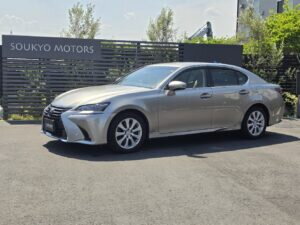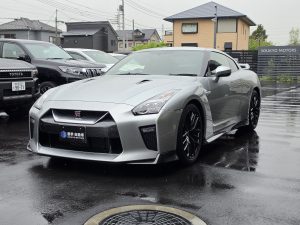
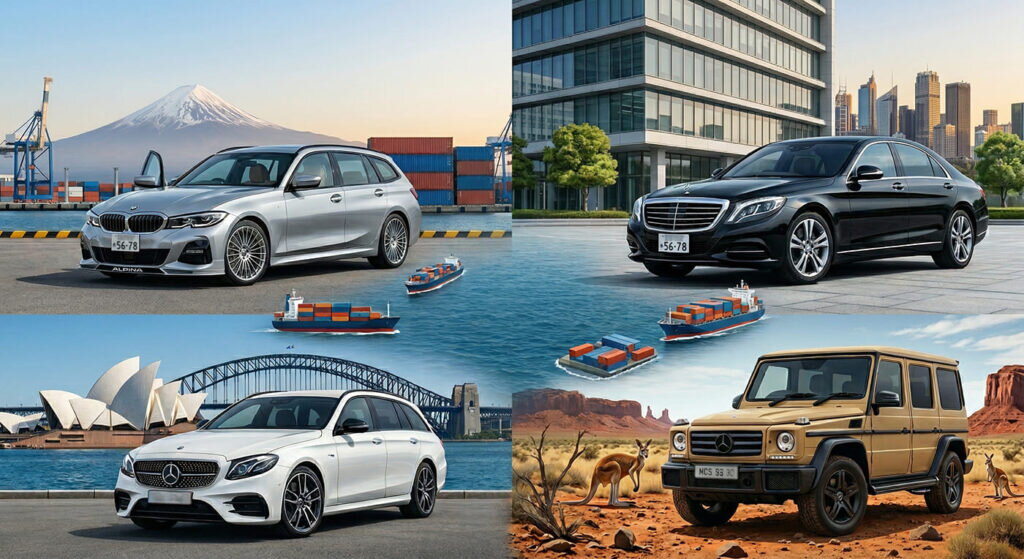
Living in Australia and browsing Japanese used-car listings, you have probably noticed something: immaculate Mercedes, BMWs, and Audis with laughably low mileage, flawless interiors, and prices that make your local dealer look like a highway robber. “Can I just ship one home?” is the natural next thought.
Here is the cold reality: Australian customs enforces a brutally strict gatekeeper for grey imports called the SEVs (Specialist and Enthusiast Vehicles) scheme. The rule is simple: if the model was officially sold through an Australian dealer, you cannot privately import it. Dreaming of a cheap 320i or A4 from Japan? Customs will tell you to send it right back.
But there is a loophole. Because Australia’s market is obsessed with burly utes and petrol V8s, the German Big Three routinely skip entire model lines Down Under. No official sales history means these cars land squarely on the SEVs whitelist — and you can legally import them.
This article breaks down, by fuel type, exactly which BBA models you can legally bring from Japan to Australia and register for road use.
Find a Used Car
Over 100 hand-picked quality vehicles in stock. Every car comes with warranty and pre-delivery inspection.
Petrol: Performance Wagons and the Alpina Goldmine
Australia’s BBA dealers have long assumed that nobody here wants a wagon. As a result, many high-performance estates were never officially offered. For import enthusiasts, this is the richest vein of opportunity.
BMW Alpina — The Entire Range
Alpina is technically an independent manufacturer, not part of BMW’s official lineup. Australian allocation has always been tiny, and used examples command serious premiums. Japan, however, is Alpina’s largest market in Asia. Models like the B3 and B5 are readily available with full service histories and obsessively maintained interiors. For roughly the price of an M3, you get the hand-finished cabin with Alpina’s signature green-and-blue stitching — a car that turns heads even among BMW enthusiasts.
Mercedes E-Class AMG Estate (e.g. S213 E53)
Specific AMG wagon configurations that were never sold in Australia qualify under the “significant performance difference” clause. Find a well-kept E53 Estate in Japan and you get a car that embarrasses muscle cars off the line while still hauling the family’s ski gear in the back.
Diesel: Torque Is King
Common diesel SUVs like the X5 or GLE are everywhere in Australia and therefore blocked from import. But a few niche diesel models slipped through the cracks.
BMW 8 Series Diesel (840d)
When Australians buy an 8 Series, BMW assumes they want a thundering V8. The diesel 840d — with its bottomless low-end torque and extraordinary cruising range — was never offered here. That puts it on the SEVs list. One tank of diesel will carry you from Sydney to Melbourne in supreme comfort. That is the promise of this grand tourer.
Mercedes G-Class Professional (G350d Professional)
Australian buyers gravitate almost exclusively toward the AMG G63 when shopping for a G-Wagen. The G350d Professional — a stripped-back, military-grade diesel workhorse with wading plates and zero pretension — was never officially imported. Bring one into the Australian Outback and you will be the most credible off-roader on the trail, bar none.
Hybrid (HEV): Flagship Bargains
Compact BBA hybrids are almost entirely blocked, but the full-size luxury segment has a golden corridor.
Mercedes S-Class S400h / S450h (W222 facelift, 2018-2020)
Mercedes Australia pushed big-displacement petrol engines and skipped the 48V ISG mild-hybrid S-Class entirely. That triggers the “significant powertrain difference” clause, making it the lone BBA entry on the hybrid whitelist.
Here is the real kicker: large luxury sedans depreciate like stones in Japan. For roughly the price of a well-equipped Toyota Camry, you can pick up an S-Class that spent its life being chauffeured by a Tokyo executive and wiped down with white gloves daily. Ship it to Australia and you get flagship presence with hybrid fuel economy.
Plug-in Hybrid (PHEV): A Barren Wasteland with One Survivor
Fair warning: this category is a minefield. Over the past decade, Australian BBA dealers imported virtually every mainstream PHEV to meet emissions targets. That means most plug-in hybrids you see in Japan are dead ends for Australian import. In this desert, only one car stands tall:
BMW i8 (I12/I15)
Yes, the sci-fi supercar Tom Cruise drove in Mission: Impossible. Butterfly doors, full carbon-fibre body, and a quirky 1.5-litre three-cylinder plug-in hybrid drivetrain. Because of its niche positioning and extremely limited Australian allocation, it sits comfortably on the import whitelist. Japan is home to plenty of low-mileage i8s purchased by wealthy collectors as weekend toys. Ship one to Australia and it still looks like a UFO on the road.
Battery Electric (EV): Playing the Time-Lag Game
Australia’s EV market was notoriously slow to get going. That delay created a window for parallel importers to exploit the timing gap.
Audi Q4 e-tron / Early Mercedes EQ Models
While Australian Audi dealers were still clearing petrol inventory, savvy importers had already registered Japan-market Q4 e-trons on the SEVs whitelist. Even now that Audi Australia has begun official sales, the early Japanese-spec models constitute a legally distinct variant. Many buyers skip the official waitlist entirely and source low-mileage near-new examples directly from Japan.
Contact Us
Buying, selling, inspections, rentals — whatever your question, we're happy to help.
Before You Buy: The Golden Rule
The core principle of importing BBA cars from Japan to Australia is not “buy a cheap daily driver.” It is “buy something Australia never got.”
If you just want reliable, fuss-free transport, buy a Toyota Crown Hybrid or Harrier from Japan — Australian compliance for those is straightforward. But if you crave the elegance of a discontinued wagon, the brutality of a diesel cruiser, or the extraordinary value of a hybrid S-Class, Japan’s used-car market is a genuine treasure trove.
Final Checklist
- Before buying, run the VIN through Australia’s ROVER portal to confirm SEVs eligibility
- Engage a qualified RAWs (Registered Automotive Workshop) in Australia to handle compliance
- Never buy blind — a car that arrives in Sydney Harbour without eligibility becomes an expensive ornament with steep storage and return shipping fees
Frequently Asked Questions
Q. Where can I check the SEVs whitelist?
A. The Australian Government’s ROVER portal allows you to look up eligibility by entering a vehicle’s VIN.
Q. Can I use a right-hand-drive Japanese car in Australia as is?
A. Yes. Australia drives on the left and uses right-hand-drive vehicles, same as Japan. No steering conversion is needed.
Q. What is the total cost of importing?
A. On top of the vehicle price, expect shipping, customs duty (5%), GST (10%), RAWs compliance work, and registration fees. Budget roughly 30-50% of the car’s purchase price for these additional costs.
Q. Can I use the 25-year classic car rule instead?
A. Vehicles over 25 years old can be imported under a separate classic car pathway, bypassing SEVs. However, most models discussed here are under 25 years old, making SEVs the primary route.
Q. How long does shipping from Japan take?
A. Approximately 2-3 weeks by RORO (roll-on/roll-off) vessel, or 3-4 weeks by container ship, depending on departure and arrival ports.