
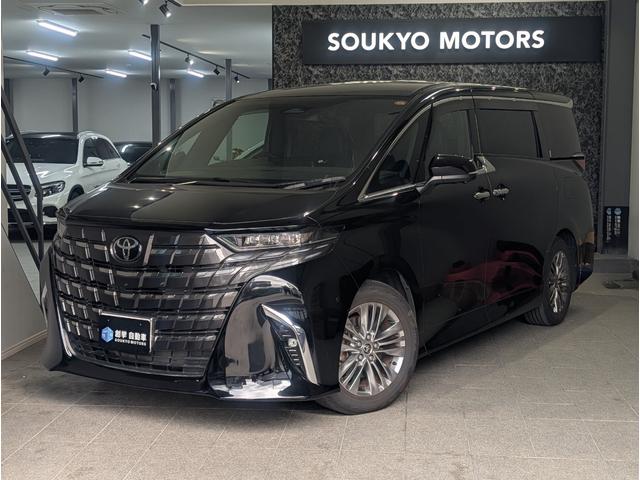
From Yokohama Port to Sydney Rego: A Deep Dive into Importing a Toyota Alphard to Australia
So you want to drive the “king of people movers” — the Alphard — on Australian roads. It’s doable, but if all you’re looking at is the hammer price at a Japanese auction, you’re in for a rude awakening when the customs bill arrives.
In the Australian vehicle import game, how deep the water gets depends entirely on how well you understand the RVS Act (Road Vehicle Standards Act). No fluff today — we’re breaking down the full process from regulations to customs to the workshop, giving you an insider’s playbook to save time, save money, and pick up your car on schedule.
Step One: Eligibility Check — Are You Buying a Car, or Expensive Scrap Metal?
Before you wire any money to Japan, you need to answer one critical question: Is the Alphard you’ve got your eye on actually allowed on Australian roads?
1.1 Understanding SEVS (Specialist and Enthusiast Vehicle Scheme)
Australia doesn’t let just any car in. If a model is already sold locally by its manufacturer, it won’t meet the SEVS “not locally available” criterion. But since the Alphard has never been officially sold in Australia by Toyota, it’s naturally SEVS-eligible — provided the specific variant you’re after is listed on the SEVs Register.
The register is publicly accessible and maintained by the federal Department of Infrastructure, available through the ROVER system (rover.infrastructure.gov.au). Crucially, seeing your model on the register ≠ a green light to load it onto a ship. It simply means “this model is eligible in principle.” You still need to obtain a Concessional RAV Entry Approval — commonly known as an “import permit” — before the vehicle ships. Without this document, your car arriving at port is technically an illegal import.
1.2 Which Alphard Models Can Be Imported?
Based on current SEVS listings, the following Alphard variants are the main ones accepted:
- Alphard Hybrid 20 Series (ANH20W / ATH20W) — The older-generation hybrid. Most budget-friendly, ideal for cost-conscious buyers. However, given their age, keep an eye on hybrid battery degradation.
- Alphard Hybrid 30 Series (AYH30W) — The undisputed workhorse of the current market. Produced from 2015 to 2022, these have the most auction stock and the most mature compliance track record.
- Alphard Hybrid 40 Series (AAHH40W etc.) — The all-new generation from 2023 onward, featuring the fifth-generation hybrid system. Already listed on the SEVS Register, but limited availability in Japan due to their newness means auction prices remain steep. Compliance workshops are still building experience with the 40 series.
Key reminder: SEVS currently lists primarily the Hybrid variants of the Alphard. SEVS eligibility for petrol-only models (e.g. AGH30W 2.5L or GGH30W 3.5L) needs to be confirmed on a case-by-case basis — don’t assume. Hybrid versions are more readily approved because they meet the “low emissions” eligibility criterion under SEVS.
1.3 The Gold Standard of Condition: How to Read Auction Grades
The standardised grading system used by Japanese auction houses is your first line of defence when assessing vehicle quality from the other side of the Pacific:
- Grade 4.5–5: Exceptional condition, near-new. Typically low mileage, accident-free, with virtually flawless interior and exterior. Naturally commands the highest prices.
- Grade 4–4.5: Very good condition with minor signs of use. This is the sweet spot for value when buying a used import.
- Grade 3.5: Acceptable, but likely has visible wear or minor repair marks on the interior or exterior.
- Grade 3 and below: A red line for experienced buyers. May have accident repairs, large-scale repainting, or significant interior wear.
- Marks R, RA, 0: These indicate accident history, structural repair, or write-off status. Absolute no-go. Australian customs has zero tolerance for structural damage or flood damage — if classified as an end-of-life vehicle, it won’t be cleared for road use. Even shipping it back to Japan is expensive — return freight can cost more than the car itself.
Pro tip: Don’t just look at the grade number. Ask your Japanese auction agent for the full auction sheet photos (including underbody, engine bay, and interior detail shots), and have them flag any areas marked with an “×.” A grade 4 car with clearly identified flaws can actually be more reassuring than a grade 4.5 with vague markings — at least you know exactly where the issues are.
Step Two: Crunching the Numbers — Don’t Overlook the “Silent Killer”
Many people’s cost calculations stop at “auction hammer price + shipping,” only to be blindsided by the taxes and fees waiting at the other end. Between a Japanese auction house and Australian number plates, there are at least five or six checkpoints ready to empty your wallet.
2.1 Customs Duty: The Good News and the Bad News Under JAEPA
Good news: Under the Japan-Australia Economic Partnership Agreement (JAEPA), customs duty on new vehicles imported from Japan has been reduced to 0%.
Bad news: If you’re importing a used vehicle (which covers the vast majority of auction-sourced Alphards), JAEPA includes a special provision — a flat specific duty of $12,000 AUD per used vehicle. That’s right — not a percentage, a fixed amount. This charge is non-negotiable.
This $12,000 flat duty exists specifically to protect Australia’s domestic used car market, so don’t hold out hope of getting around it. The only way to avoid it is to import a brand-new vehicle (under two years old and first-registered may qualify as new), but that means paying new-car prices in Japan, which often pushes the total cost even higher.
Documentation you’ll need: To claim JAEPA tariff concessions, you must provide a Certificate of Origin / Declaration of Origin issued by the Japanese exporter. The format must comply with JAEPA Annex 3 requirements.
2.2 GST (Goods and Services Tax): 10%, No Exceptions
All imported vehicles are subject to 10% GST. The tax base is the Customs Value, which typically includes:
- Purchase price in Japan (including auction fees)
- Domestic transport to the Japanese port
- Ocean freight
- Insurance
- The customs duty itself
In other words, GST is calculated on top of the total after you’ve already paid duty. It’s a “tax on tax” structure. For example: if your Alphard’s customs value (including duty) comes to $60,000 AUD, the GST alone is $6,000.
2.3 LCT (Luxury Car Tax) — The Real Silent Killer
This is where a lot of first-time Alphard importers get caught out.
Australia’s Luxury Car Tax is a federal tax levied at 33%, but only on the amount exceeding the threshold. The 2025–26 financial year thresholds are as follows:
| Vehicle Category | LCT Threshold |
|---|---|
| Standard vehicles | $80,567 AUD |
| Fuel-efficient vehicles (≤ 3.5L/100km) | $91,387 AUD |
Important change (effective 1 July 2025): The Australian government has tightened the definition of “fuel-efficient vehicle.” The previous threshold was a combined fuel consumption under 7L/100km; it’s now been lowered to 3.5L/100km. This means even the Alphard Hybrid, with its real-world consumption of around 5–6L/100km, no longer qualifies for the higher fuel-efficient threshold and falls under the standard $80,567 limit.
How LCT is calculated: The amount exceeding the threshold is first divided by 11, then multiplied by 10 (to remove the GST component), then multiplied by 33%.
Worked example: Say your Alphard’s GST-inclusive landed value (LCT Value) is $95,000:
- Amount above threshold: $95,000 − $80,567 = $14,433
- Remove GST component: $14,433 ÷ 11 × 10 = $13,121
- LCT payable: $13,121 × 33% = $4,330
That might not seem huge, but if your car is a top-spec Executive Lounge with a landed value easily clearing $120,000 or even $150,000, the LCT can balloon to over ten or even twenty thousand dollars.
Insider tax tip: The key to managing LCT is controlling the “LCT Value,” which includes the value of all accessories and add-ons imported with the car. So if you’re planning to fit a Modellista body kit or other pricey accessories, do not ship them with the car — buy and install them separately after import, and their value won’t be rolled into the LCT base.
Another exemption: According to ATO rules, vehicles designed to carry 9 or more passengers are exempt from LCT. The standard Alphard seats 7–8 and does not qualify.
2.4 Full Cost Breakdown (Estimates)
Using a 30 Series Alphard Hybrid SR-C 4WD (auction grade 4.5, 50,000 km) as a reference, here’s a rough breakdown of costs:
| Item | Estimated Cost (AUD) |
|---|---|
| Japan auction hammer price | $25,000 – $35,000 |
| Japan domestic transport + export processing | $1,000 – $2,000 |
| Ocean freight (RORO) | $2,000 – $3,500 |
| Ocean freight (Container) | $4,000 – $6,000 |
| Import duty (flat used-vehicle duty) | $12,000 |
| GST (10%) | $4,500 – $6,000 |
| LCT (if total exceeds threshold) | $0 – $5,000+ |
| Customs brokerage fees | $500 – $1,000 |
| Biosecurity inspection / BMSB treatment | $300 – $1,500 |
| Compliance (workshop modifications) | $3,000 – $6,000 |
| Registration + stamp duty + inspection | $1,500 – $3,000 |
| Total (RORO shipping) | Approx. $55,000 – $80,000 |
| Total (Container shipping) | Approx. $57,000 – $83,000 |
These ranges are indicative only and will vary depending on the auction price, exchange rate fluctuations, and your choice of service providers.
Step Three: Biosecurity — Your Survival Guide to BMSB “Bug Season”
This is the most overlooked step in the entire import process, yet it’s the one most likely to cause delays and unexpected costs.
3.1 What Is BMSB?
BMSB stands for Brown Marmorated Stink Bug, an invasive pest native to East Asia that’s highly destructive to crops. Every Northern Hemisphere autumn and winter (September through April), these bugs seek warm places to overwinter — and vehicles, machinery, and shipping containers in international transit become their “five-star hotels.”
3.2 Australia’s Seasonal BMSB Controls
2025–26 BMSB season: Applies to goods manufactured in or shipped from target risk countries between 1 September 2025 and 30 April 2026 (based on the bill of lading ship date).
Japan’s classification: Japan is listed as an “emerging risk country,” meaning vehicles shipped from Japan don’t require mandatory pre-departure treatment but will be subject to random inspections upon arrival in Australia. If BMSB is detected during inspection, the consequences are serious — demurrage charges, mandatory fumigation costs, and potentially being ordered to re-export the vehicle.
Extra risk with RORO vessels: All RORO vessels that have called at a target risk country during BMSB season must undergo a mandatory seasonal pest inspection. If BMSB is found on board, the entire ship’s cargo may be held pending further treatment. This isn’t a risk you can personally control, but it can very much affect when you get your car.
3.3 Seasoned Strategies for Dealing with BMSB
Strategy one: Ship off-season. If timing allows, try to complete the auction and shipping between May and August (after one BMSB season ends and before the next begins). No additional BMSB treatment is needed during this window, and customs clearance moves faster.
Strategy two: Proactive pre-treatment for in-season shipments. If you must ship between September and April, arrange heat treatment (heating the vehicle or container to above 56°C for at least 30 minutes) or chemical fumigation (sulfuryl fluoride or methyl bromide) in Japan before departure. Treatment must be performed by a provider approved by DAFF (Department of Agriculture, Fisheries and Forestry) and accompanied by a valid treatment certificate.
Strategy three: Use a container instead of RORO. Container shipping has a relative advantage during BMSB season: if cargo has been properly treated before loading and sealed within the required timeframe (120 hours before December), a “sealing declaration” can be used to streamline the clearance process. Vehicles on RORO ships don’t have this option.
Step Four: The Shipping Decision — RORO or Container?
How does your Alphard get from Japan to Australia? It’s not simply a matter of “pick whichever is cheaper.”
4.1 RORO (Roll-on/Roll-off)
How it works: The vehicle is driven directly onto the RORO vessel’s car deck, secured in place, and driven off at the destination port.
Pros:
- Lower cost, typically $2,000–$3,500 AUD (Yokohama to Sydney/Melbourne)
- Simple process with quick loading and unloading
- Suitable for standard-spec vehicles that don’t need extra protection
Cons:
- Vehicle is exposed to the marine environment on deck (salt spray, humidity) — sheltered but not sealed
- Higher risk during BMSB season (whole-vessel inspections)
- No large accessories or personal items can be shipped with the car
- Routes and schedules are set by the shipping line, with limited flexibility
4.2 Container Shipping
How it works: The vehicle is loaded into a 20-foot or 40-foot standard container and secured with ratchet straps and wooden chocks.
Pros:
- Sealed environment offers the best protection for the vehicle
- Parts, tyres, and accessories can be shipped inside the container alongside the car
- Sealing declaration option available during BMSB season
- Ideal for high-value vehicles, especially Executive Lounge trims or those with Modellista/TRD body kits
Cons:
- Higher cost, typically $4,000–$6,000 AUD
- Unless you’re consolidating other cargo, a 20-foot container for a single Alphard isn’t the most efficient use of space (though the Alphard is large enough that a 20-footer is a snug fit)
- Loading and unloading the container requires additional coordination
4.3 Port Selection
Departure ports in Japan:
- Yokohama: The primary vehicle export port with the most shipping routes and frequent direct services to Sydney/Melbourne. Most vehicles purchased from Kanto-region auction houses are consolidated here for loading.
- Nagoya: A major export port in central Japan — Toyota’s home turf. If your car was sourced from an auction house near Nagoya, shipping from here can save on domestic Japanese transport costs.
- Osaka/Kobe: Export ports serving the Kansai region, depending on where the auction house is located.
Arrival ports in Australia:
- Sydney (Port Kembla / Sydney)
- Melbourne
- Brisbane
Transit time is typically 14–21 days, depending on the route and intermediate port calls.
Step Five: Compliance — Where the Real Technical Work Happens
Your car has arrived at an Australian port, cleared customs, and passed the biosecurity check — but you’re not done yet. Legally, it’s still not a vehicle that can be driven on Australian roads. It needs to go through a licensed Registered Automotive Workshop (RAW) for compliance modifications.
5.1 What Is a RAW?
A RAW is a federally certified workshop authorised to modify imported vehicles to meet ADR (Australian Design Rules) standards. Not just any mechanic can do compliance work — the workshop must hold an approved Model Report for the specific vehicle model, proving they know how to bring that particular model into compliance.
Choosing a RAW: Look for a workshop with extensive Alphard compliance experience. Experience means they know the modification process inside out, have established relationships with parts suppliers, and have a low rework rate. Ask them how many Alphards they’ve completed and what their average turnaround time is.
5.2 Typical Compliance Modifications
Once a Japanese-import Alphard arrives at a RAW, the following modifications are typically required:
Lighting system adjustments: While both Japan and Australia are right-hand drive / left-hand traffic, certain aspects of the Japanese headlight beam pattern may not fully align with ADR requirements — things like low-beam cut-off angles, DRL brightness, and positioning may need tweaking.
Speedometer calibration: ADR requires the speedometer to display in metric units. Japan also uses metric, so a swap is usually unnecessary. However, some models may offer a dual mph/kph display option, and the default must be confirmed as kilometres.
Child restraint anchor points (ISOFIX / Top Tether): This is a major compliance focus area. Australia has specific requirements under ADR 34 for child restraint anchors, including their location, strength, and accessibility. Japanese Alphards typically come with ISOFIX already fitted, but Top Tether anchor points may need to be repositioned, re-specified, or added.
Seatbelt testing: All seatbelts must comply with the ADR 4 series standards, including functional testing of pretensioners and load limiters.
Emissions and noise standards: The vehicle must meet the applicable Australian emissions standards. Hybrid Alphards generally have no issues here, as Japanese emission standards are broadly equivalent to Australia’s.
Door locks and anti-theft systems: The electronic immobiliser may need to be verified against ADR 25.
Third brake light, reflectors, and rear fog light: ADR has specific requirements for these external lights and reflective markings. Japanese models may lack a rear fog light (if not factory-fitted), which will need to be added.
Compliance Plate: Once all modifications are complete, the RAW installs a Compliance Plate on the vehicle. It displays key technical specifications, the applicable ADR standards, and the RAW’s identification details. This plate is essentially your car’s “identity card” in Australia — without it, the vehicle cannot be registered in any state or territory.
5.3 Compliance Timeframes and Costs
Timeframe: The industry reality right now is that RAW queue times can be substantial. A 2–6 week turnaround is fairly standard, and it can stretch longer during peak periods or when workshops are backed up. If your car is a newer 40 Series or has an unusual configuration (e.g. a Welcab welfare vehicle), expect even longer lead times.
Cost: Typically $3,000–$6,000 AUD, depending on the model, year, workshop pricing, and scope of modifications required. If additional imported parts are needed (such as specific-spec light assemblies), costs will be higher.
Step Six: Registration — The Final Hurdle
With the Compliance Plate fitted, congratulations — your Alphard is finally eligible to be driven on Australian roads. But to do so legally, you still need to complete state or territory-level vehicle registration.
6.1 State Registration Overview
Australia is a federation, and each state and territory has its own road transport authority and registration requirements:
New South Wales (NSW):
- Authority: Service NSW / Transport for NSW
- Requires a Blue Slip (unregistered vehicle safety inspection), issued by an authorised inspection station
- Fees include registration, stamp duty, and CTP (Compulsory Third Party personal injury insurance)
Victoria (VIC):
- Authority: VicRoads
- Requires an RWC (Roadworthy Certificate), issued by a licensed vehicle tester
- Fees include registration, stamp duty, and TAC (Transport Accident Commission levy)
Queensland (QLD):
- Authority: Department of Transport and Main Roads
- Requires a Safety Certificate
- Fees include registration, stamp duty, and CTP
6.2 Stamp Duty
This is a vehicle transfer tax levied by each state, with rates varying by jurisdiction. It’s typically based on the higher of the vehicle’s market value or the transaction price. In NSW, for example, the stamp duty rate is approximately 3% of the vehicle’s value. For an Alphard with a landed value of $80,000, stamp duty would come to around $2,400.
Rates and calculation methods differ across states, so check the relevant state transport authority’s website for the latest schedule before registering.
6.3 Insurance
- CTP / TAC (compulsory insurance): Must be purchased at the time of registration. The name varies by state, but it covers third-party personal injury in traffic accidents.
- Comprehensive insurance: Not mandatory, but strongly recommended. Repair costs for an imported Alphard are high (parts often need to be ordered from Japan), and being uninsured when a claim arises can be financially devastating. Some insurers charge a premium loading for parallel imports, and a few may decline cover altogether — so shop around.
Step Seven: Living with It — The “Survival Challenge” After Registration
Most guides stop at registration, but the real test is just beginning.
7.1 Parts Supply
The Alphard isn’t an official Toyota Australia model, which means:
- Toyota Australia dealerships do not stock Alphard parts
- Routine service items (oil filters, air filters, brake pads, etc.) are relatively easy to source through generic equivalents or Japanese parts suppliers
- Model-specific parts (hybrid system modules, body panels, electronic control units, etc.) need to be ordered from Japan or other markets, with lead times ranging from days to weeks
- If the hybrid battery pack needs replacing, it’s a major expense ($3,000–$8,000 AUD), and not every workshop is equipped to handle hybrid systems
7.2 Servicing and Repairs
- Toyota Australia’s official dealerships may refuse or be reluctant to service a parallel-imported Alphard
- You’ll need to find an independent mechanic who’s familiar with JDM (Japanese Domestic Market) vehicles
- The onboard systems (navigation, infotainment, driver assists) may have a Japanese-only interface. While language-conversion solutions exist, some deeper functions may not be fully translatable to English
7.3 Warranty
- There is no manufacturer warranty. Toyota Japan’s new-vehicle warranty does not extend to the Australian market
- Some importers offer their own extended warranty plans (e.g. UniBee’s 5-year warranty), but read the fine print carefully and understand exactly what’s covered and what’s excluded
- For high-value components like the hybrid system, an extended warranty is particularly worthwhile
Pitfall Guide for the Experienced (Advanced Tips)
❌ Don’t try to tamper with the odometer
Australia has dedicated Japanese vehicle history databases that can retrieve mileage data from Japanese auction records. If your car showed 80,000 km at auction in Japan but reads 30,000 km when it lands in Australia, it’ll be flagged immediately. The consequences: the vehicle may be impounded, and the importer’s licence could be revoked.
❌ Don’t ship the car before securing Import Approval
The correct order is: apply for and receive your Concessional RAV Entry Approval → then complete the purchase in Japan → then arrange shipping. Many first-timers get this backwards, and the car arrives at port before the paperwork comes through — with demurrage charges ticking by the day.
❌ Don’t impulse-buy when the exchange rate is against you
JPY/AUD exchange rate swings can shift your actual purchase cost by thousands of dollars within a few weeks. Set a budget ceiling and keep a close eye on the rate. If possible, lock in a favourable rate by converting currency in advance.
❌ Don’t ignore the insurance “gap period”
From the moment your car arrives at port until compliance and registration are complete, there’s no road insurance in place (because the car isn’t registered yet). But while it’s sitting in a warehouse or workshop, it’s still exposed to risks like theft, fire, and flooding. Confirm whether your customs broker or compliance workshop has premises insurance that covers client vehicles, or arrange separate storage insurance yourself.
✅ Always use an Alphard-experienced RAW and get Import Approval first
Without this “birth certificate,” shipping the car means it arrives as an illegal import. An experienced RAW can not only process your approval but also advise you during the car selection phase on which configurations will add to compliance difficulty and cost.
✅ Set aside a 15–20% contingency budget
Exchange rate movements, unexpected BMSB treatment fees, storage charges from workshop queue delays, surprise vehicle issues discovered during compliance — these “surprises” can and do happen. Don’t budget too tight.
Summary: Importing an Alphard Isn’t a Purchase — It’s a Process
From start to finish — from kicking off the process to putting Australian plates on your Alphard in Sydney — expect 8–14 weeks if everything goes smoothly. If things don’t go to plan (BMSB season port holds, workshop queues, paperwork issues), it can stretch to 4–6 months.
Key milestones recap:
- Confirm SEVS eligibility → Check the model on the ROVER system
- Apply for Import Approval → Submit through a RAW to the federal Department of Infrastructure
- Japan auction + purchase → Target grade 4+ / verify vehicle history / arrange pre-export inspection
- Biosecurity treatment → Check if shipping falls within BMSB season / arrange pre-treatment or ship off-season
- Ocean freight → Choose RORO or container / confirm departure and arrival ports
- Australian customs clearance → Pay duty + GST / pass biosecurity inspection
- Compliance modifications → Enter RAW / complete all ADR modifications / obtain Compliance Plate
- LCT assessment → Determine whether LCT is triggered / lodge with ATO
- State registration → Blue Slip / RWC / stamp duty / CTP
Think this whole process sounds like a headache? That’s perfectly normal. It’s exactly why most people choose to go through an experienced import agent who handles everything end-to-end — from sourcing at auction in Japan, through all the customs, logistics, and compliance work. All you need to do is wait for a phone call in Sydney telling you it’s time to pick up your car and get it registered.
Want to know roughly what your preferred model would cost to land this year? Drop the year and trim in the comments and we’ll run the numbers for you.
Disclaimer: The content of this article is for informational purposes only and does not constitute legal, tax, or financial advice. Australian import regulations, tax rates, and biosecurity requirements are subject to change at any time. Please refer to the latest information published on federal and state government websites. We recommend consulting a licensed customs broker and registered automotive workshop before commencing the import process.



The horrible $12,000 AUD duty is not genuine. The duty for used Japanese vehicles is MFN rate (5%).